The Definitive Guide to Figuring Out Mass Percent in Chemistry
Mass percent is the silent backbone of chemistry, the unassuming metric that transforms raw data into meaningful insights. Whether you're analyzing a compound in a lab, formulating a new alloy, or troubleshooting an industrial process, understanding how to figure out mass percent is non-negotiable. It’s the bridge between theoretical knowledge and practical application—a skill that separates novice chemists from professionals who command precision.
The concept isn’t just confined to textbooks. In pharmaceutical development, mass percent determines drug potency. In materials science, it dictates the properties of composites. Even in environmental monitoring, it reveals the concentration of pollutants in air or water. Yet, for all its critical role, mastering how to calculate mass percent often feels like solving a puzzle without the full picture. The formulas are straightforward, but the nuances—like handling mixed compounds or accounting for impurities—demand a deeper grasp.
This guide dismantles the ambiguity. From the fundamental equation to advanced troubleshooting, we’ll explore every facet of figuring out mass percent, ensuring you leave with the confidence to apply it in any scenario. No fluff, no assumptions—just the essentials, broken down with clarity.

The Complete Overview of Figuring Out Mass Percent
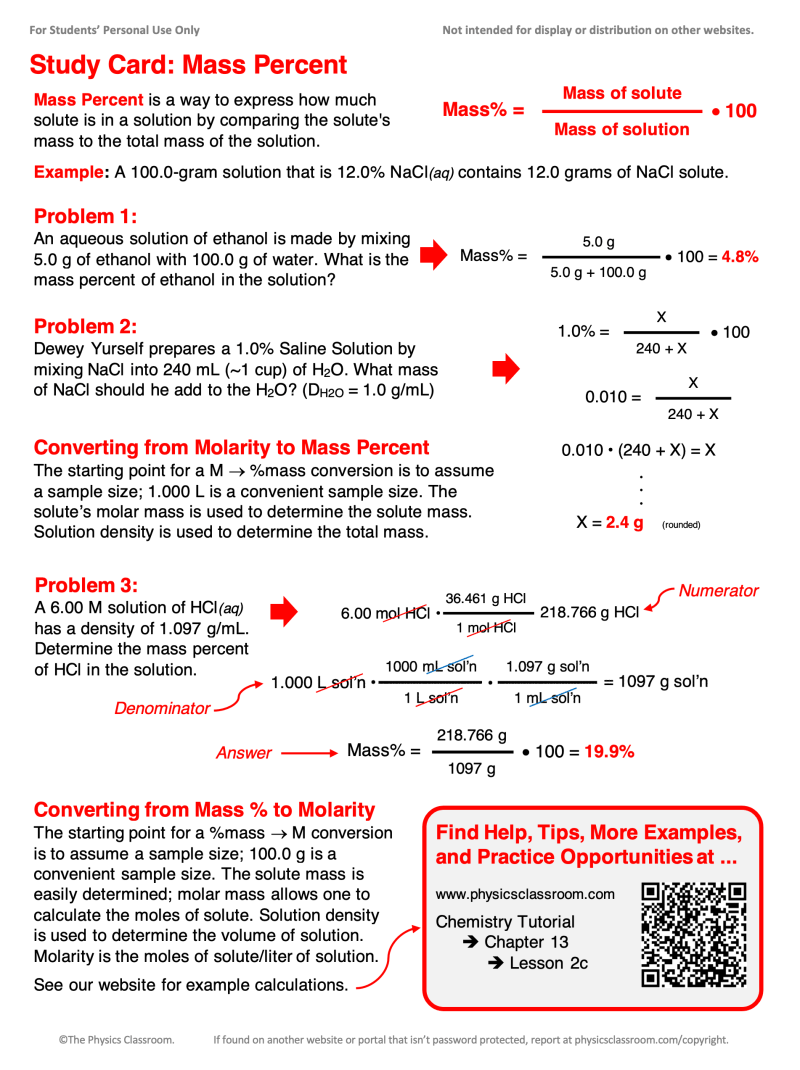
At its core, mass percent—often called percentage composition—quantifies how much of a given element or component exists within a compound or mixture, expressed as a percentage of the total mass. The formula is deceptively simple: divide the mass of the part (the element or component of interest) by the total mass of the whole, then multiply by 100 to convert to a percentage. Yet, the devil lies in the details. Is the sample pure? Are there multiple components? Is the reaction stoichiometric? These questions transform a basic calculation into a multi-step process requiring meticulous attention.
The beauty of mass percent lies in its versatility. It’s used to verify the purity of a synthesized compound, to design alloys with specific properties, or to interpret the results of an elemental analysis. But without a structured approach, even seasoned chemists can stumble. The key is understanding not just the formula, but the context—whether you’re working with a homogeneous mixture, a heterogeneous blend, or a compound undergoing decomposition. Each scenario demands a tailored method, and that’s where precision begins.
Historical Background and Evolution
The origins of mass percent trace back to the 18th century, when early chemists like Antoine Lavoisier and Joseph Proust began quantifying the elemental composition of substances. Lavoisier’s law of conservation of mass laid the groundwork, while Proust’s law of definite proportions established that compounds always contain elements in fixed ratios by mass. These principles were the first steps toward systematic calculating mass percentages, though the term itself didn’t emerge until later in the 19th century as analytical techniques advanced.
Table of Contents
- The Complete Overview of Figuring Out Mass Percent
- Historical Background and Evolution
- Core Mechanisms: How It Works
- Key Benefits and Crucial Impact
- Major Advantages
- Comparative Analysis
- Future Trends and Innovations
- Conclusion
- Comprehensive FAQs
- Q: What’s the difference between mass percent and weight percent?
- Q: How do I handle mass percent calculations for mixtures with unknown components?
- Q: Can mass percent be used for gases?
- Q: What’s the most common mistake when calculating mass percent?
- Q: How does temperature affect mass percent calculations?
- Q: Is mass percent the same as mole percent in a compound?
The 20th century brought transformative tools: spectroscopy, chromatography, and mass spectrometry. These innovations allowed chemists to measure mass percentages with unprecedented accuracy, even for trace elements. Today, computational models and automated instruments have further refined the process, but the foundational concept remains unchanged. What has evolved is the ability to handle complexity—whether it’s a multi-component pharmaceutical or a nanoscale material—while maintaining the integrity of the calculation.
Core Mechanisms: How It Works
The process of figuring out mass percent hinges on three pillars: accurate measurement, correct identification of components, and precise arithmetic. Start with the total mass of the sample, then isolate the mass of the target element or component. For example, in a 100g sample of water (H2O), the mass of hydrogen is 2g (from 2 × 1.008 g/mol), and oxygen is 98g (from 16.00 g/mol). Dividing each by 100g and multiplying by 100 yields 2% hydrogen and 98% oxygen—a textbook case of percentage composition.
But real-world scenarios rarely present such simplicity. Consider a mixture of sodium chloride (NaCl) and sand (SiO2). To determine the mass percent of sodium (Na), you’d first need to separate or analyze the components, then apply the formula to each. The challenge escalates with impurities or unknown reactions, where assumptions must be validated through additional tests. This is where experience and cross-verification become indispensable.
Key Benefits and Crucial Impact
The ability to calculate mass percent**> isn’t just a technical skill—it’s a gateway to solving real-world problems. In quality control, it ensures products meet regulatory standards. In research, it validates experimental results. Even in forensics, mass percent analysis can identify unknown substances. The precision it offers is unmatched, reducing errors that could lead to costly missteps or safety hazards.
Beyond its practical applications, mass percent fosters a deeper understanding of chemical behavior. By dissecting a compound’s composition, chemists can predict reactivity, stability, and even thermal properties. This predictive power is what makes mass percent a cornerstone of both academic and industrial chemistry.
“Chemistry is the science of transformations, and mass percent is the language that quantifies those changes. Without it, we’re left with guesswork.” — Dr. Eleanor Voss, Analytical Chemistry Professor
Major Advantages
- Precision in Formulation: Ensures exact ratios in drug manufacturing, alloys, and polymers, minimizing waste and maximizing efficiency.
- Quality Assurance: Detects deviations in raw materials or final products, preventing defects or failures.
- Research Validation: Confirms theoretical models against experimental data, accelerating scientific discovery.
- Safety Compliance: Meets industry standards (e.g., FDA, ISO) by verifying hazardous or reactive components.
- Cost Optimization: Reduces material waste by identifying optimal compositions for desired properties.

Comparative Analysis
| Aspect | Mass Percent | Mole Percent |
|---|---|---|
| Definition | Mass of component / Total mass × 100 | Moles of component / Total moles × 100 |
| Primary Use | Elemental analysis, mixtures, purity testing | Gas laws, reaction stoichiometry, vapor-phase systems |
| Dependence on Molar Mass | Requires accurate molar masses for components | Relies on mole ratios, independent of mass |
| Common Applications | Pharmaceuticals, metallurgy, environmental samples | Combustion reactions, atmospheric studies, ideal gas mixtures |
Future Trends and Innovations
The future of figuring out mass percent lies in automation and artificial intelligence. Machine learning algorithms are already being trained to predict mass percentages from spectral data, reducing the need for manual calculations. Meanwhile, lab-on-a-chip devices promise rapid, on-site analysis with minimal sample preparation. These advancements will democratize precision, making advanced mass percent calculations accessible to smaller labs and field researchers.
Another frontier is real-time monitoring. Sensors embedded in industrial processes could continuously track mass percentages, enabling instantaneous adjustments for optimal performance. Coupled with big data analytics, this could revolutionize fields like energy storage or catalytic chemistry, where composition directly impacts efficiency.
Conclusion
Mastering how to figure out mass percent is more than memorizing a formula—it’s about developing a mindset of precision. Whether you’re a student grappling with stoichiometry or a professional optimizing a synthesis, the principles remain the same: measure accurately, identify components rigorously, and calculate without compromise. The tools may evolve, but the core remains unchanged: mass percent is the language of chemical accuracy.
As techniques advance, so too will the applications. But the foundation—understanding the basics—will always be the key to unlocking potential. Start with the fundamentals, refine with practice, and let the calculations guide you toward solutions that matter.
Comprehensive FAQs
Q: What’s the difference between mass percent and weight percent?
A: There is no practical difference. "Mass percent" and "weight percent" are interchangeable in chemistry, as they both refer to the ratio of a component’s mass to the total mass, expressed as a percentage. The term "weight" is sometimes used colloquially, but "mass" is the standard in scientific contexts to avoid confusion with gravitational effects.
Q: How do I handle mass percent calculations for mixtures with unknown components?
A: When components are unknown, use techniques like chromatography or spectroscopy to separate and identify them first. Alternatively, if the mixture’s total mass is known but individual masses aren’t, you may need to assume or measure the density and volume (for liquids) or rely on empirical data. Cross-referencing with known properties (e.g., boiling points) can also help deduce compositions.
Q: Can mass percent be used for gases?
A: Yes, but it’s less common than mole percent for gases. Mass percent is used when dealing with gas mixtures where mass is the critical factor (e.g., air pollution analysis). Convert mole fractions to mass percentages using molar masses if needed. For ideal gases, mole percent is typically preferred due to its direct relation to partial pressures (via Dalton’s law).
Q: What’s the most common mistake when calculating mass percent?
A: The most frequent error is misidentifying the "total mass" or failing to account for all components. For example, in a hydrated compound like CuSO4·5H2O, forgetting to include the water molecules in the total mass will skew the percentage. Always double-check that the denominator reflects the entire sample, including solvents or impurities.
Q: How does temperature affect mass percent calculations?
A: Temperature can influence mass percent indirectly by altering densities or causing phase changes (e.g., condensation or sublimation). For solids and liquids, assume mass remains constant unless the sample decomposes or reacts. For gases, temperature affects volume but not mass; however, if the gas escapes or reacts, the total mass of the system changes, requiring recalibration.
Q: Is mass percent the same as mole percent in a compound?
A: No. Mole percent refers to the ratio of moles of a component to total moles, while mass percent is based on mass. For example, in CO2, carbon is 27.29% by mass but 8.33% by moles. The two are related but serve different purposes: mass percent is useful for physical properties, while mole percent is critical for reaction stoichiometry.
Leave a Comment
Comments are moderated before appearing. The data you submit is processed according to the Privacy Policy of aedes.nl.