Tag
physics applications
-

The Math Behind Perpendicularity: How to Find a Vector Perpendicular to Another Vector
What makes this problem fascinating is its duality. In two dimensions, the solution is almost intuitive—a simple rotation or reflection suffices. But in...
-

What Does Approximate Mean in Math? The Hidden Power Behind Precision
The word approximate itself carries layers of meaning. In everyday language, it suggests a rough estimate, but in mathematics, it becomes a systematic approach...
-

What Is the Number in Front of the Square Root? The Hidden Role in Math, Science, and Real-World Applications
At its core, the coefficient determines how the irrational properties of roots interact with rational numbers, altering the magnitude, direction, or even the...
-
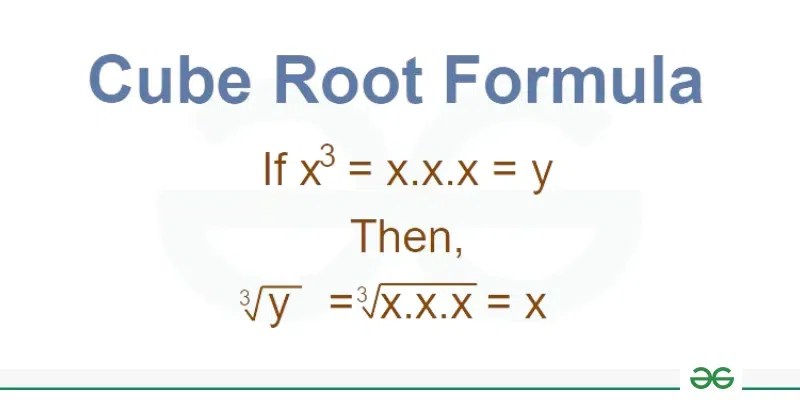
The Hidden Depths of What Is the Cube Root of 1 and Why It Matters
This triad isn’t just an academic curiosity. It underpins algorithms in computer science, encodes symmetries in crystallography, and appears in the eigenvalues...
-

Decoding the Power: Sum of Geometric Series Formula Explained
What makes it particularly fascinating is its dual nature: it simplifies seemingly endless calculations into a concise equation while exposing deeper truths...
-

The Hidden Geometry: What Is the Standard Form of a Parabola and Why It Matters
The parabola is one of mathematics’ most enduring shapes—a curve so precise it can focus sunlight into a single point, shape satellite dishes, and define the...
-

How to Get Angle Between Two Vectors: The Definitive Mathematical and Practical Guide
At its heart, the angle between two vectors is a measure of their relative orientation, quantified in radians or degrees. The most direct method leverages the...
-

The Hidden Geometry: Directrix and Focus of a Parabola Explained
Yet, the concept remains elusive to many. The directrix—a fixed line—and the focus—a single point—seem deceptively simple until one attempts to visualize their...
-

Decoding the Group Symbol for Quaternions: q or ℍ vs. ℚ in Math’s Hidden Language
Yet confusion persists. Why does the group symbol for quaternions sometimes appear as q (a variable) and other times as ℍ (the Dedekind symbol)? The answer...
-

The Hidden Rhythm: What Is the Period of sin x and Why It Matters in Math and Beyond
The answer lies in the sine function’s origins. Born from the study of right triangles and later formalized through the unit circle, sin x emerged as a tool to...
-

Why the Sum of a Rational and Irrational Number Always Yields a Radical Truth
At first glance, the distinction between rational and irrational numbers might seem arbitrary: one is expressible as a fraction, the other isn’t. But their...
-

The Hidden Depths of What Is the Antiderivative of 0
What emerges is not just an answer but a lens through which to examine the nature of integration itself. The antiderivative of 0 isn’t merely a constant—it’s a...
-

How the Sum of Kinetic and Potential Energy Powers Modern Physics
At its core, the sum of kinetic and potential energy —often called mechanical energy —is a statement of conservation. When a diver leaps from a platform, their...
-

How thermal energy used in a sentence reveals science, tech, and daily life’s hidden power
The phrase "thermal energy used in a sentence" might seem like a linguistic curiosity at first glance, but it’s a gateway to understanding how science...
-

The Hidden Power of Rate of Change in Linear Functions: Why It Matters More Than You Think
The slope of a line isn’t just a number—it’s a silent architect shaping everything from stock market trends to the trajectory of a rocket. When you hear "rate...
-

Unlocking the Integral of sin x from 0 to π: A Mathematical Masterpiece
What makes this integral particularly instructive is its role as a textbook example of how definite integrals quantify net change. Unlike indefinite integrals...
-

What Is the Reciprocal of Sine? The Hidden Role of Cosecant in Math and Science
At first glance, the reciprocal relationship between sine and cosecant might seem like a mere algebraic curiosity. However, this connection is far from...
-

Unlocking the Unit Circle: Mastering Sin, Cos, Tan, Csc, Sec, Cot
At its core, the unit circle transforms abstract angles into concrete ratios. A 30° angle isn’t just a degree—it’s a point on the circle where the x...
-

How to Find the Period of a Trigonometric Function: Mastering the Hidden Patterns in Waves
The challenge lies in the transformation. A basic sine function, y = sin(x) , repeats every 2π units, but introduce a horizontal stretch or compression, and...
-

Unlocking Precision: The Definitive Guide to the Slope Formula Two Points Educational Source
At its core, the slope formula two points educational source serves as the bridge between abstract coordinates and tangible outcomes. It’s not merely about...