Unraveling What Is Bronsted Lowry Acid and Base: The Definitive Science Breakdown
The first time you encounter what is Bronsted Lowry acid and base, it isn’t just another abstract concept—it’s a paradigm shift in how chemists perceive acidity and basicity. Unlike the older Arrhenius model, which tied acids to hydrogen ions in water, the Bronsted-Lowry framework expands the definition to any species capable of donating or accepting protons (H+ ions), regardless of the medium. This broader perspective explains why vinegar (acetic acid) reacts differently in water than in ethanol, or why ammonia’s basicity persists even in non-aqueous solvents. The theory doesn’t just describe reactions; it predicts them, making it indispensable in fields from pharmaceutical synthesis to environmental science.
Yet, the elegance of this model often gets overshadowed by its simplicity. At its core, what is Bronsted Lowry acid and base hinges on two fundamental roles: acids as proton donors and bases as proton acceptors. But the devil lies in the details—conjugate pairs, equilibrium constants, and solvent effects all play critical roles in determining reaction outcomes. Take the case of carbonic acid (H2CO3), a weak acid in water but a potent proton donor in blood plasma, where it buffers pH. Here, the Bronsted-Lowry framework clarifies why biological systems rely on such molecules to maintain homeostasis. The theory’s power lies in its universality—it applies to gas-phase reactions, enzymatic catalysis, and even superacidic environments where traditional models fail.
What often confuses learners is the apparent contradiction between Bronsted-Lowry and Lewis acid-base definitions. While Lewis theory focuses on electron pair sharing, Bronsted-Lowry zeroes in on proton transfer—a distinction that becomes critical in designing catalysts or interpreting spectroscopic data. For instance, in a reaction like HCl + NH3 → NH4+ + Cl-, HCl acts as a Bronsted-Lowry acid by donating H+, but Cl- could also function as a Lewis base by donating an electron pair. Understanding these dualities is key to mastering what is Bronsted Lowry acid and base in practical scenarios, from drug formulation to corrosion prevention.

The Complete Overview of What Is Bronsted Lowry Acid and Base
The Bronsted-Lowry theory, proposed in 1923 by Johannes Nicolaus Brønsted and Thomas Martin Lowry, revolutionized acid-base chemistry by decoupling the concept from water’s presence. Before this, the Arrhenius definition limited acids to substances producing H+ in aqueous solutions—a restrictive view that excluded gases like CO2 or solvents like liquid ammonia. The Bronsted-Lowry model, however, redefined acids as proton donors and bases as proton acceptors, creating a framework that transcends solvents. This shift wasn’t just theoretical; it enabled chemists to explain reactions in non-aqueous media, such as the protonation of amines in organic solvents, or the behavior of superacids like HF-BF3.
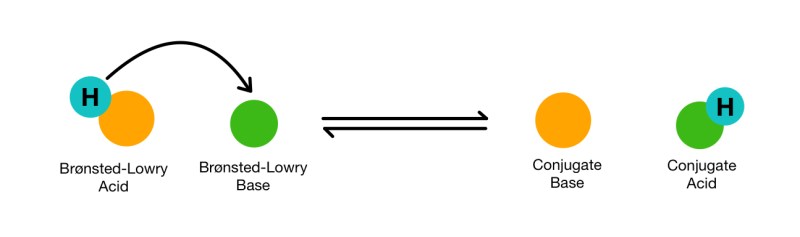
The theory’s genius lies in its conjugate pair concept. Every acid (AH) has a corresponding conjugate base (A-), and every base (B) has a conjugate acid (BH+). This reciprocal relationship governs equilibrium: the stronger the acid, the weaker its conjugate base, and vice versa. For example, in the reaction H2SO4 + H2O ⇌ H3O+ + HSO4-, sulfuric acid (H2SO4) donates a proton to water, forming hydronium (H3O+) and bisulfate (HSO4-). Here, H2SO4 is the acid, HSO4- its conjugate base, and H2O the base. This duality ensures that acid-base reactions are always reversible, with equilibrium favoring the side with the weaker acid and base.
Historical Background and Evolution
The development of what is Bronsted Lowry acid and base was a response to the limitations of Svante Arrhenius’s 1884 theory, which tied acidity to hydrogen ion release in water. While Arrhenius’s model worked for simple compounds like HCl, it failed to explain why substances like NH3 (ammonia) exhibit basicity without producing OH- ions. Brønsted and Lowry independently proposed their proton-transfer framework in 1923, building on Gilbert Lewis’s earlier electron-pair theory. Their work was particularly influential in physical chemistry, where reactions often occur in non-aqueous environments, such as liquid ammonia or molten salts. The theory also bridged gaps in industrial chemistry, where acid-base catalysis (e.g., in petroleum refining) relies on proton transfers.
Table of Contents
- The Complete Overview of What Is Bronsted Lowry Acid and Base
- Historical Background and Evolution
- Core Mechanisms: How It Works
- Key Benefits and Crucial Impact
- Major Advantages
- Comparative Analysis
- Future Trends and Innovations
- Conclusion
- Comprehensive FAQs
- Q: How does the Bronsted-Lowry theory differ from the Lewis theory?
- Q: Can water act as both an acid and a base in the Bronsted-Lowry sense?
- Q: Why is the conjugate base of a strong acid a weak base?
- Q: How do buffers work according to the Bronsted-Lowry theory?
- Q: Are there exceptions to the Bronsted-Lowry theory?
One of the theory’s earliest triumphs was explaining the leveling effect—the phenomenon where strong acids in water all appear equally strong because H3O+ is the dominant species. For instance, HCl, HNO3, and H2SO4 all dissociate completely in water, yielding the same pH. However, in less basic solvents like acetic acid, their relative strengths re-emerge. This solvent-dependent behavior aligns perfectly with the Bronsted-Lowry definition, which emphasizes proton transfer dynamics over fixed ionic products. The theory’s adoption was further solidified by its ability to predict equilibrium constants (Ka, Kb) and explain amphoteric substances like HCO3- (bicarbonate), which can act as both an acid and a base depending on the reaction partner.
Core Mechanisms: How It Works
The Bronsted-Lowry framework operates on two pillars: proton transfer and conjugate pairs. When an acid (AH) donates a proton to a base (B), the products are the conjugate base (A-) and the conjugate acid (BH+). The reaction is governed by the equilibrium constant Keq = [A-][BH+]/[AH][B], where the position of equilibrium depends on the relative strengths of the acid and base. For example, in the reaction CH3COOH + H2O ⇌ CH3COO- + H3O+, acetic acid (CH3COOH) donates a proton to water, forming acetate (CH3COO-) and hydronium (H3O+). The equilibrium lies far to the left because acetic acid is a weak acid and water a weak base.
The theory’s predictive power stems from its quantitative treatment of acidity. The acid dissociation constant (Ka) measures an acid’s tendency to donate protons, while the base dissociation constant (Kb) does the same for bases. These constants are related by the equation Ka × Kb = Kw (the ion product of water, 1.0 × 10⁻¹⁴ at 25°C). For instance, the Ka of acetic acid is 1.8 × 10⁻⁵, meaning it partially dissociates in water, whereas the Ka of HCl is effectively infinite (fully dissociated). This quantitative approach allows chemists to design buffers, calculate pH, and even engineer superacids for industrial applications. The Bronsted-Lowry model also explains autoprotolysis, where a solvent (like water) can act as both an acid and a base in self-ionization (H2O + H2O ⇌ H3O+ + OH-).
Key Benefits and Crucial Impact
The Bronsted-Lowry theory isn’t just an academic curiosity—it’s the backbone of modern acid-base chemistry, with applications spanning medicine, agriculture, and materials science. Its ability to generalize acid-base behavior across solvents and phases has made it indispensable in fields like pharmacology, where drug solubility and stability depend on protonation states. For example, aspirin’s efficacy hinges on its carboxylic acid group’s ability to donate protons, while local anesthetics like lidocaine rely on their basic nitrogen atoms to cross cell membranes. Even in environmental science, the theory explains how acid rain forms when SO2 or NOx gases dissolve in water, donating protons to form H2SO4 or HNO3.
The theory’s impact extends to technology, where proton transfers drive fuel cells, batteries, and corrosion processes. In catalysis, Bronsted acids (like H2SO4) accelerate reactions by protonating reactants, while bases (like NaOH) deprotonate them. The semiconductor industry uses superacids to etch silicon wafers, and biochemists apply the theory to study enzyme mechanisms, where amino acid side chains (e.g., histidine’s imidazole group) act as proton relays. Without the Bronsted-Lowry framework, these advancements would be impossible to predict or control.
— Linus Pauling
"Acid-base chemistry is the language of chemistry itself. The Bronsted-Lowry model gave us the grammar to understand it."
Major Advantages
- Universal Applicability: Unlike Arrhenius’s water-centric definition, Bronsted-Lowry applies to gases, liquids, and solids, including non-aqueous solvents like DMSO or liquid ammonia.
- Quantitative Predictions: Ka and Kb values allow precise calculations of equilibrium positions, pH, and buffer capacities in solutions.
- Conjugate Pair Insight: The theory clarifies why some substances (e.g., HCO3-) can act as both acids and bases, enabling better control in chemical synthesis.
- Industrial Relevance: From pharmaceutical formulation to petroleum refining, proton transfer mechanisms are optimized using Bronsted-Lowry principles.
- Biological Relevance: Explains pH regulation in blood (via bicarbonate buffers), enzyme catalysis, and drug-receptor interactions.

Comparative Analysis
| Aspect | Bronsted-Lowry vs. Arrhenius |
|---|---|
| Definition Scope | Proton transfer (AH ⇌ A- + H+); works in any solvent. Arrhenius: H+ or OH- in water only. |
| Key Limitation | Excludes non-protonic acids/bases (e.g., AlCl3, a Lewis acid). Arrhenius excludes NH3 (no OH- produced). |
| Predictive Power | Quantifies acid/base strength via Ka/Kb; explains solvent effects. Arrhenius limited to aqueous pH calculations. |
| Industrial Use | Designs catalysts, buffers, and non-aqueous reactions. Arrhenius insufficient for gas-phase or organic solvents. |
Future Trends and Innovations
The Bronsted-Lowry theory continues to evolve with advances in computational chemistry and nanotechnology. Modern research is pushing its boundaries by studying superacids (e.g., magic acid, CF3SO3H) that protonate even noble gases, or frustrated Lewis pairs that mimic acid-base chemistry without protons. These innovations are critical for developing new materials, such as proton-conducting membranes for fuel cells or acid-resistant coatings for aerospace applications. Additionally, machine learning is being used to predict Ka/Kb values for novel compounds, accelerating drug discovery and green chemistry initiatives.
Another frontier is bioinorganic chemistry, where Bronsted-Lowry principles explain how metalloenzymes (e.g., carbonic anhydrase) use proton transfers to catalyze reactions at near-diffusion-limited rates. Synthetic chemists are also exploring chiral acids/bases to control stereochemistry in organic synthesis, a trend with implications for pharmaceutical manufacturing. As solvents like ionic liquids gain prominence, the theory’s adaptability ensures its relevance in designing "green" chemical processes. The future of what is Bronsted Lowry acid and base lies in its intersection with quantum mechanics and materials science, where proton dynamics govern everything from battery performance to atmospheric chemistry.
Conclusion
The Bronsted-Lowry theory remains one of the most influential frameworks in chemistry, not because it’s the oldest, but because it’s the most versatile. By redefining acids and bases in terms of proton transfer, it unlocked a world of reactions previously deemed impossible to explain. From the pH of your stomach to the catalysts in your car’s exhaust system, the principles of what is Bronsted Lowry acid and base are at work. Its strength lies in its simplicity—two roles (donor/acceptor), two products (conjugate pairs)—yet its applications are boundless, spanning medicine, energy, and environmental science.
As research progresses, the theory’s boundaries will expand further, integrating with emerging fields like quantum biology and nanoscale catalysis. For students and professionals alike, understanding Bronsted-Lowry isn’t just about memorizing definitions; it’s about grasping a fundamental language of chemistry that shapes the world around us. Whether you’re synthesizing a new drug, optimizing a chemical process, or studying the acidity of rainwater, the proton’s journey—from donor to acceptor—is the story at the heart of it all.
Comprehensive FAQs
Q: How does the Bronsted-Lowry theory differ from the Lewis theory?
The Bronsted-Lowry theory focuses on proton (H+) transfer, defining acids as proton donors and bases as acceptors. The Lewis theory, by contrast, defines acids as electron pair acceptors and bases as electron pair donors. While all Bronsted-Lowry acids/bases are Lewis acids/bases, the reverse isn’t true—e.g., AlCl3 is a Lewis acid (accepts electrons) but not a Bronsted-Lowry acid (doesn’t donate H+). The Bronsted-Lowry model is more limited but easier to apply in proton-transfer reactions.
Q: Can water act as both an acid and a base in the Bronsted-Lowry sense?
Yes. Water is amphoteric: it can donate a proton (acting as an acid) or accept a proton (acting as a base). For example, in the reaction H2O + H2O ⇌ H3O+ + OH-, one water molecule donates a proton (acid), and the other accepts it (base). This self-ionization is why pure water has a pH of 7 at 25°C—the equilibrium between H3O+ and OH- is equal.
Q: Why is the conjugate base of a strong acid a weak base?
This follows from the Bronsted-Lowry equilibrium principle: the stronger the acid, the more readily it donates its proton, leaving its conjugate base with little tendency to reaccept a proton. For instance, HCl is a strong acid (fully dissociated in water), so Cl- (its conjugate base) has negligible basicity. Conversely, the conjugate base of a weak acid (e.g., CH3COO- from acetic acid) is stronger because it can more easily reaccept a proton to reform the acid.
Q: How do buffers work according to the Bronsted-Lowry theory?
Buffers resist pH changes by utilizing a conjugate acid-base pair. For example, a bicarbonate buffer (HCO3-/CO32-) works because HCO3- can donate a proton (acting as an acid) or accept one (acting as a base). When added acid (H+) enters, HCO3- accepts it to form H2CO3; when added base (OH-) enters, H2CO3 donates a proton to neutralize it. The equilibrium shifts to minimize pH changes, maintaining stability.
Q: Are there exceptions to the Bronsted-Lowry theory?
While the theory covers most proton-transfer reactions, exceptions arise in extreme conditions. For example, in superacidic environments (e.g., HF-SbF5), even noble gases like Xe can be protonated, challenging traditional definitions. Additionally, some reactions (e.g., those involving radical species) may not fit neatly into proton-donor/acceptor frameworks. However, for the vast majority of acid-base chemistry—especially in aqueous and organic solvents—the Bronsted-Lowry model remains robust and predictive.
Leave a Comment
Comments are moderated before appearing. The data you submit is processed according to the Privacy Policy of aedes.nl.